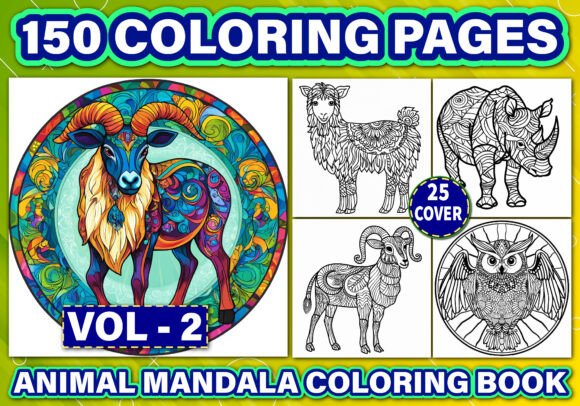
150 Animal Mandala Coloring Pages KDP
If you're building a profitable Amazon KDP coloring book business—or expanding your creative product line—the 150 Animal Mandala Coloring Pages KDP bundle isn’t just another collection. It’s a thoughtfully engineered, production-ready asset designed for real-world publishing workflows. This isn’t clipart repackaged as “mandalas.” These are hand-crafted, balanced, and intentionally paced designs—each one built around an animal motif (from foxes and owls to elephants and hummingbirds), rendered with rhythmic symmetry, layered organic linework, and breathing space that invites focus—not frustration.
The visual personality is calm but confident: intricate enough to satisfy experienced colorists, yet clear and legible at 8.5″ × 8.5″ with bleed. There’s no visual noise—no muddy overlaps, inconsistent line weights, or cramped negative space. Every page respects the medium: thick enough strokes to hold up in print, clean vector-derived edges in the PNGs, and crisp grayscale contrast in the PDFs. That clarity translates directly into reader trust. When someone opens your book and sees consistent spacing, intentional repetition, and harmonious scale across 150 pages, they don’t just color—they stay. And they come back for Volume 2.
Where This Bundle Fits—Beyond Just Coloring Books
Yes, it’s ideal for Amazon KDP interiors—but its utility stretches further than most creators realize. Because each file comes in three formats (PDF, JPG, PNG) at 300 DPI and includes bleed, you’re not locked into one use case. The PNGs—especially the transparent-background versions—are ready for social media carousels, printable workshop handouts, or layered digital art projects. The JPGs drop cleanly into Canva templates for Etsy listing mockups or Instagram story frames. And the editable PDFs? Those let you insert custom title pages, add your branding watermark, or reflow layouts for different trim sizes without starting from scratch.
Designers use these pages as base layers in editorial design—overlaying subtle textures or duotones for premium print zines. Marketers repurpose select mandalas as branded mindfulness assets: think email headers for wellness newsletters or background elements in webinar slides. Crafters print individual pages on cardstock for handmade greeting cards or resin molds. Even educators pull specific animal pages for themed SEL (social-emotional learning) activities—pairing the fox mandala with lessons on adaptability, or the turtle with themes of patience and grounding.
Readability, Hierarchy, and the Quiet Power of Consistency
Coloring isn’t passive—it’s active attention work. So readability here isn’t about words; it’s about how easily the eye navigates the pattern. Strong line definition, predictable rhythm, and strategic variation in density keep the brain engaged without fatigue. Notice how the central animal motif anchors each page, while surrounding layers gradually increase in complexity outward—this creates natural visual hierarchy. You don’t need bold headers or captions to guide the user. The design does it.
That consistency also builds brand perception. If you publish multiple volumes under the same series name—say, “Animal Mandalas Vol. 1” and “Vol. 2”—readers recognize your aesthetic instantly. No guesswork. No diluted identity. That reliability signals professionalism, especially when your interior files match Amazon’s print specs out of the box: correct bleed, CMYK-safe grayscale, embedded fonts (where applicable), and no hidden transparency issues.
Practical Integration: What to Check Before You Publish
Before uploading to KDP or bundling for resale, do three quick checks:
- Test one page at actual size. Print a single JPG on your home printer. Hold it at arm’s length. Are lines still distinct? Does the central animal read clearly? If details vanish or blur, adjust contrast in your editing software—not the source file.
- Verify bleed alignment. Open the PDF in Adobe Acrobat or Preview and turn on crop marks. Ensure no critical linework falls within the 0.125″ bleed zone. These files include bleed by design—but if you’re adding borders or frames later, double-check margins.
- Review format intent. Use the PDF for KDP uploads (it preserves vector-like sharpness). Use the PNGs when you need transparency—for overlays or digital products. Use the JPGs for fast previews, thumbnails, or platforms that don’t accept PDFs.
You’ll also find 25 high-res cover PNGs included—designed to complement the interior style, not compete with it. They use the same line weight language, similar animal motifs, and restrained color palettes (even though interiors are black-and-white). That cohesion strengthens shelf presence. A customer scrolling through Amazon sees a cover with a poised wolf mandala—and flips to see 150 more pages built with that same care. That’s recognition. That’s retention.
Commercial Use Done Right
This bundle carries full commercial rights—no attribution required, no usage caps, no platform restrictions. You can sell it on Amazon KDP, Gumroad, your own Shopify store, or even license individual pages to studios. But rights alone don’t guarantee success. What matters is how you apply them. For example: bundling 10–15 pages as a “Mini Animal Mandala Sampler” for email list sign-ups adds value without diluting your main product. Or offering the PNGs as a separate “Design Resource Pack” for fellow creators who want to build their own journals or merch.
Just remember—commercial flexibility works best when paired with thoughtful execution. Don’t just upload and forget. Add quiet touches: a short intro page explaining the symbolism behind five common animals in the set; a subtle “designed for slow creativity” tagline on your cover; or a companion blog post on mindful coloring techniques using these pages. That’s how 150 Animal Mandala Coloring Pages KDP stops being a download—and becomes part of someone’s routine.