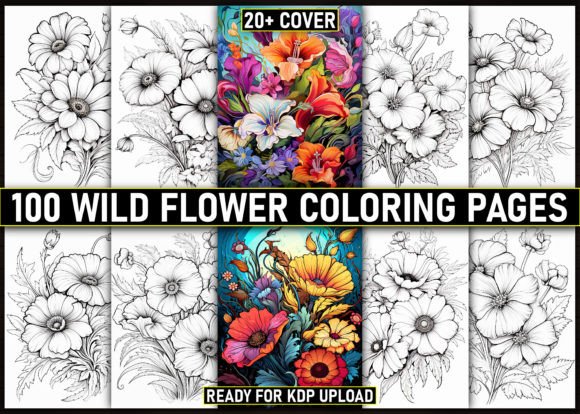
100 Wild Flower Coloring Pages for KDP
If you're building a coloring book business on Amazon KDP—or planning to launch your first high-content title—you’ll likely encounter dozens of “100 Wild Flower Coloring Pages for KDP” bundles online. But not all are created equal. What looks like a time-saving, ready-to-publish resource can become a costly bottleneck if you overlook critical production details, licensing clarity, or file usability. This isn’t about discouraging you—it’s about helping you move forward confidently, with files that print cleanly, scale reliably, and convert well with adult colorists.
What You’re Really Getting (and What Most Listings Don’t Clarify)
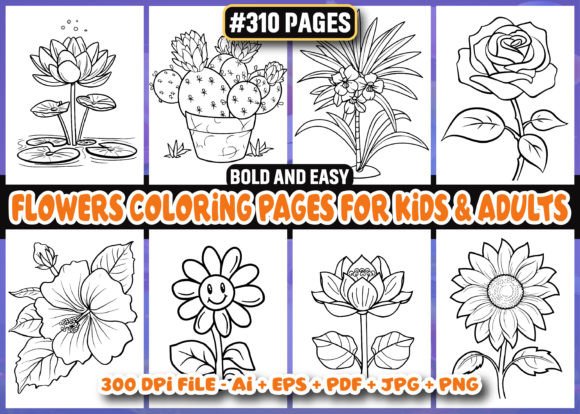
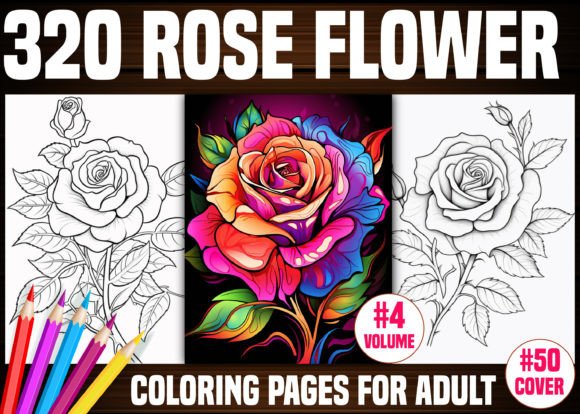
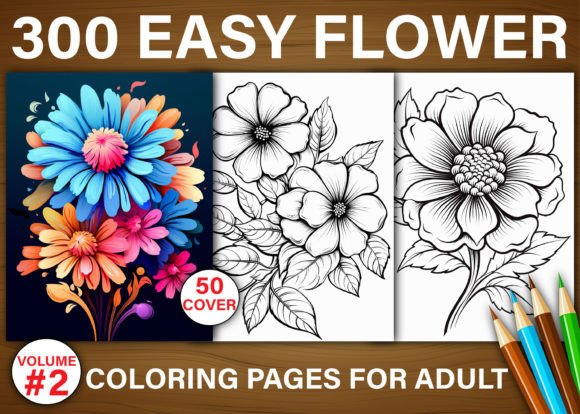
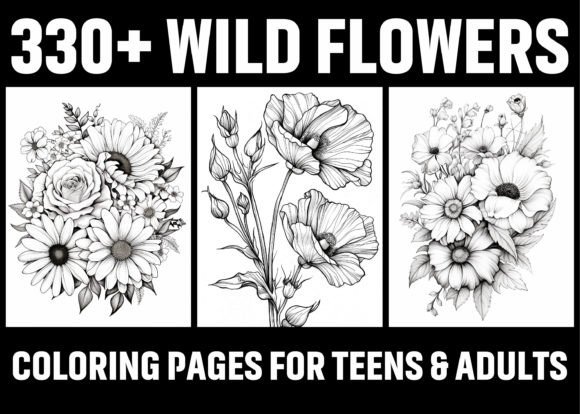
The phrase 100 Wild Flower Coloring Pages for KDP often implies completeness—but completeness depends on your goals. For example, the version described here includes 100 unique black-and-white line art pages in PNG, JPG, and PDF formats—all A4 (8.5″ × 11″) with bleed—plus 50 premium cover PNGs and 20 bonus cover illustrations. That’s more than many competitors offer. Yet many buyers assume “ready for print” means “plug-and-play.” In reality, “ready” only applies if your workflow matches the file structure and resolution.
A common oversight? Assuming all 100 PNGs are print-optimized at 300 DPI *and* sized precisely for KDP’s trim + bleed requirements. Some bundles deliver 72 DPI web graphics upscaled in design software—leading to pixelation, fuzzy edges, or inconsistent line weights when printed. Others include bleed but misalign it, causing critical artwork to be cut off during binding.
1. Skipping the File Audit Before Importing
Before dragging files into Canva, Affinity Publisher, or Adobe InDesign, open one or two PNGs at 100% zoom. Check for: stray pixels, uneven line thickness, unintentional grayscale shading, or embedded watermarks. Even subtle inconsistencies—like a petal outline that’s 1px thinner than the stem—become glaring under halftone screening. One creator launched a 100 Wild Flower Coloring Pages for KDP title only to receive multiple customer complaints about “faint lines” on pages 42–47. Turns out those were exported from low-res vector previews, not final raster assets.
2. Overlooking Cover Image Licensing Scope
“50 cover images included” sounds generous—until you read the fine print. Some bundles grant personal use only, or prohibit using covers in ads, social media thumbnails, or as part of a series branding system. If you plan to run Amazon Sponsored Ads or build an email list around your wildflower theme, confirm whether those 50 PNGs allow commercial promotion *beyond* the book itself. Better yet: choose bundles that explicitly state “commercial use permitted, including marketing and derivative works.”
3. Assuming All Formats Are Interchangeable
JPGs compress. PNGs preserve transparency—but KDP doesn’t support transparent backgrounds in interiors. Using a PNG with alpha channel without flattening first may cause unexpected white borders or registration shifts. PDFs are great for proofing, but unless they’re single-page, non-layered, CMYK-ready exports (not RGB screen PDFs), they’ll require re-exporting anyway. The smart approach? Use PNGs for interior layout (they retain crispness), verify each is flattened and 300 DPI, then export your final KDP PDF *from your layout tool*—not from the source file folder.
What to Verify Before You Buy—or Before You Hit “Publish”
Don’t rely solely on screenshots or marketing copy. Here’s what to check in under five minutes:
- Resolution test: Download a sample page. Open it in Preview (Mac) or Paint (Windows), zoom to 200%. Lines should remain sharp—not blurry or stair-stepped.
- Bleed alignment: Open a page in any free PDF viewer. Measure 0.125″ margins on all sides. If artwork runs right to the edge with no buffer, it lacks proper bleed—and will risk white borders or trimmed details.
- Line weight consistency: Compare stems, leaves, and petals across three random pages. Are outlines uniformly bold enough for colored pencils or gel pens? Lines under 0.4 pt often disappear when shaded.
- File naming logic: Well-organized bundles name files sequentially (e.g., wildflower-001.png, wildflower-002.png). Random names (IMG_9482_final_v2_alt.png) suggest disorganized sourcing—and possibly duplicated or low-effort content.
Why “Adult” Matters More Than “100”
Calling something “for adult” isn’t just demographic labeling—it signals intentionality in design. Adults don’t need childish simplification, but they *do* appreciate thoughtful complexity: layered petals, botanical accuracy, varied stem structures, and negative space that invites shading technique. The strongest 100 Wild Flower Coloring Pages for KDP collections avoid repetitive templates (e.g., 20 nearly identical daisies) and instead curate species with distinct silhouettes—lupine, foxglove, coneflower, yarrow, milkweed—each offering unique textural opportunities.
One educator used this collection to develop a botany-themed mindfulness workshop. She selected 12 pages representing native pollinator plants, added short ecological notes beside each, and printed them as take-home handouts. That only worked because the line art was clean, scalable, and botanically grounded—not generic clipart.
A Smarter Starting Point
If you’re evaluating multiple 100 Wild Flower Coloring Pages for KDP options, prioritize bundles that give you control—not just volume. Look for editable source files (vector EPS or AI where possible), clear commercial licenses, and documentation that explains how each format is intended to be used. Avoid anything that forces you to guess whether “high-resolution” means 300 DPI at actual print size—or just “looks good on screen.”
You don’t need 100 pages to start. You need 100 *usable*, *consistent*, and *audience-aligned* pages—backed by files that behave predictably in your tools and on KDP’s press. When you get that right, the rest follows: better reviews, stronger organic visibility, repeat buyers, and room to expand into companion titles—like seasonal wildflower editions or regional field guides with coloring overlays.
Take the time to inspect before you invest. Your readers—and your KDP dashboard—will thank you.