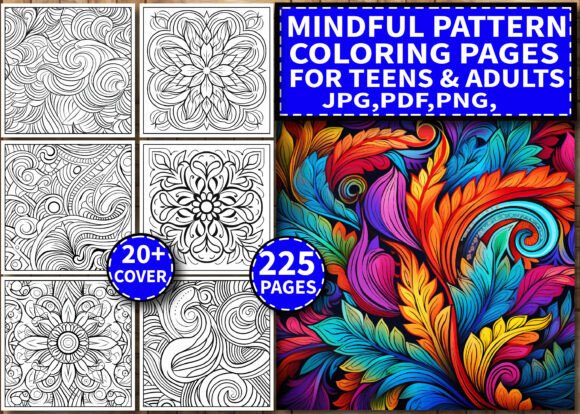
225 Mindful Pattern Coloring Pages - KDP
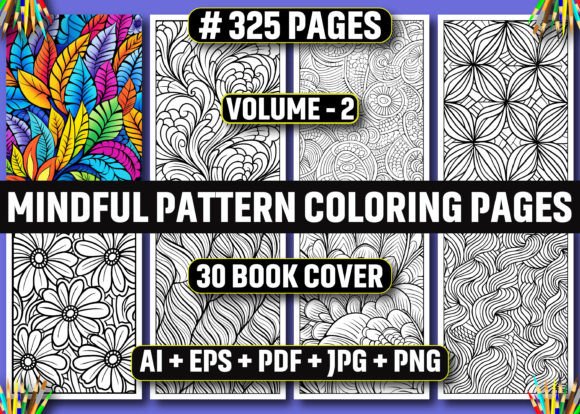
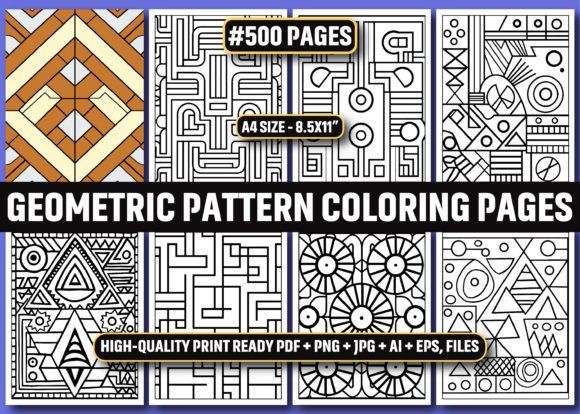
If you're building a digital product business on Amazon KDP—or launching print-on-demand (POD) coloring books for teens and adults—225 Mindful Pattern Coloring Pages - KDP isn’t just another bundle. It’s a production-ready, commercially flexible asset designed to save time, reduce design overhead, and scale with your brand. These aren’t generic clipart fillers or low-res repeats. Every page is hand-crafted for visual balance, rhythmic repetition, and mindful engagement—think intricate mandalas, organic florals, geometric lattices, and abstract tessellations that breathe space into complexity.
The aesthetic leans into contemporary wellness culture without leaning into cliché: clean linework, intentional negative space, and consistent stroke weight across all 225 pages. There’s no visual fatigue—no overcrowded motifs or inconsistent scaling. Each design respects the 8.5″ × 8.5″ trim with bleed, meaning it prints cleanly on standard KDP interior specs. That consistency matters—not just for professionalism, but for reader trust. When someone opens your book and finds uniform quality from page one to page 225, they’re more likely to leave a 5-star review, recommend it, or buy your next title.
Why This Bundle Fits Real Publishing Workflows
This isn’t a “just add cover and upload” shortcut—it’s built for how creators actually work. You get three file formats per page: PDF (print-ready, CMYK-optimized), JPG (300 DPI, RGB, ideal for social teasers or preview thumbnails), and PNG (transparent background, 300 DPI, perfect for layered mockups or custom composites). That flexibility means you can use the same asset across multiple touchpoints: KDP interiors, Canva templates, Etsy listings, Instagram carousels, or even as standalone digital downloads in your own store.
The 20 included cover PNGs (also 300 DPI) aren’t stock placeholders. They’re cohesive, on-brand variations—some minimalist, some textured, some with subtle gradients or foil-effect overlays—all sized for KDP’s 6″ × 9″ or 8.5″ × 8.5″ cover specs. No need to hire a designer just to launch. And because every interior file is true black-and-white (not grayscale), ink costs stay low for POD partners—and contrast remains crisp on both home printers and commercial presses.
Design Integrity Meets Commercial Practicality
Here’s what experienced publishers notice first: no pixelation at 300 DPI, no jagged edges on curves, no stray anchor points or vector artifacts. The line art holds up when zoomed in at 400% in Adobe Illustrator or scaled down for thumbnail previews. That technical rigor translates directly into fewer customer complaints about blurry pages or misaligned bleeds—two top reasons for KDP returns and negative reviews.
It also means you can confidently extend the asset beyond coloring books. Use individual patterns as backgrounds in Notion templates, as SVG cut files for Cricut users, or as texture layers in Procreate brushes. Because the PNGs have transparent backgrounds, they integrate cleanly into editorial layouts, branding kits, or even packaging design for physical craft kits. One creator recently used 12 of the floral patterns as repeating motifs on sticker sheets sold alongside their journal line—no additional licensing needed.
How to Evaluate Fit—Before You Build Around It
Ask yourself three things before committing: First, does the line weight and density match your audience’s preference? Teens often respond well to bolder outlines and slightly more playful motifs (like interlocking animals or cosmic swirls), while adults tend to favor refined symmetry and subtle layering. This bundle balances both—pages 1–75 lean slightly bolder; 76–150 introduce more delicate linework; 151–225 explore asymmetrical rhythm. Skim the preview thumbnails in order—you’ll feel the pacing.
Second, check your workflow compatibility. If you rely heavily on Canva, the JPG and PNG files drop in instantly. If you prep interiors in Affinity Publisher or InDesign, the PDFs retain vector fidelity and embed cleanly. And if you’re automating uploads via KDP’s bulk tool, having 225 consistently named, sequentially numbered files (e.g., mindful_001.jpg, mindful_002.jpg) saves hours versus renaming manually.
Third, consider scalability. Since all files are royalty-free for commercial use—including resale on Amazon, Etsy, Gumroad, or your own site—you’re not locked into one platform. One publisher used the same 225 pages to launch four distinct KDP titles: a “Stress Relief” edition, a “Focus Flow” version with guided prompts added, a “Teens Only” variant with edgier borders, and a bilingual Spanish/English release. All from one download.
Realistic Pairings and Practical Next Steps
You don’t need a designer to make this work—but knowing how to pair it thoughtfully helps. For covers, avoid overly ornate fonts that compete with the patterns. A clean sans serif like Montserrat Bold or Poppins SemiBold creates strong hierarchy without shouting. For interior title pages or section dividers, a light-weight serif (like Lora or Merriweather) adds quiet sophistication next to the bold line art.
If you’re bundling digitally, group files meaningfully: “Pages 1–50: Mandalas & Symmetry”, “Pages 51–100: Nature-Inspired”, etc. Buyers scan folders—clear naming builds confidence. And always test-print at least three pages on your target paper stock (e.g., 60# matte vs. 80# bright white) before finalizing a KDP proof. Line clarity shifts subtly depending on absorbency and brightness.
Finally, remember: the strongest KDP listings don’t just sell coloring pages—they solve problems. Frame your title and description around outcomes: “Reduce screen fatigue with analog focus”, “Rebuild attention stamina through structured pattern work”, or “Gift a tactile reset for overstimulated teens”. The 225 Mindful Pattern Coloring Pages - KDP gives you the raw material. Your voice, positioning, and audience insight turn it into something people seek out—not scroll past.